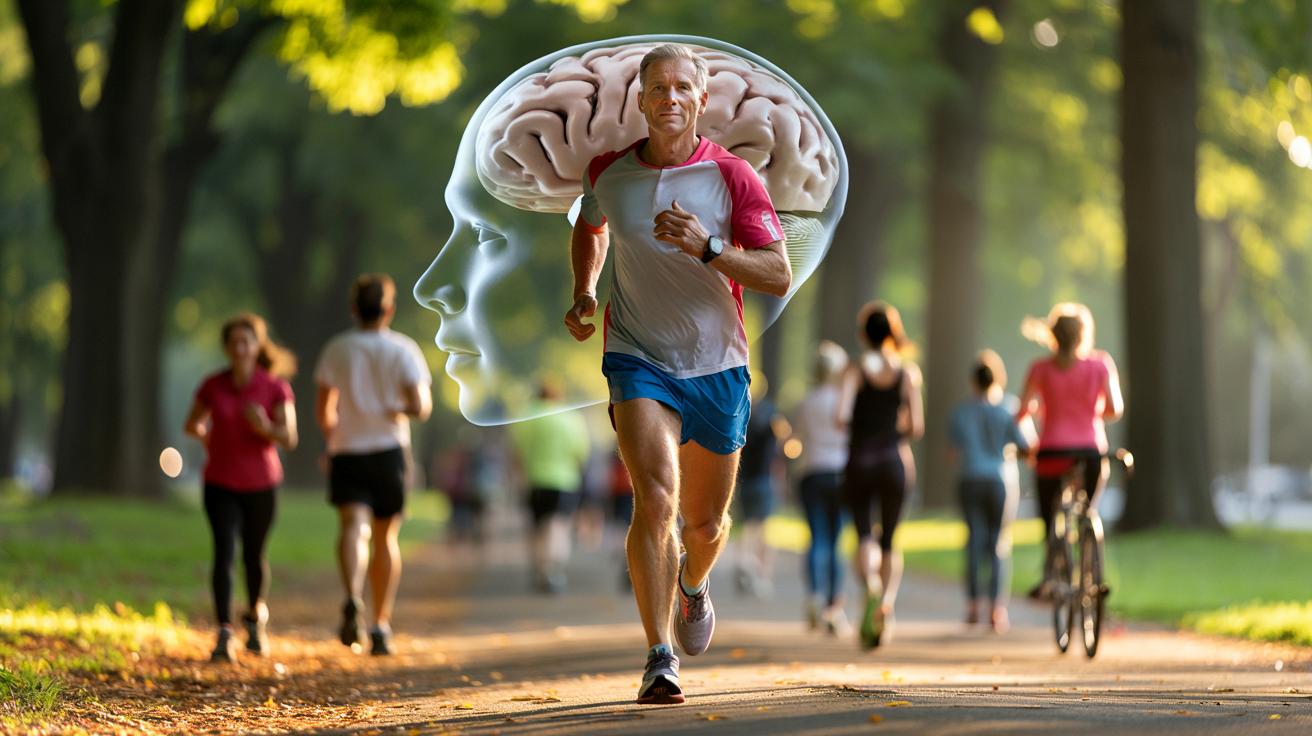
Brisk walks, sweaty gym sessions and regular cardio might be doing more than toning muscles – they could be quietly rewinding your brain’s biological clock.
New research suggests that structured aerobic exercise over just one year can make the brain appear biologically younger than the person’s real age, adding fresh weight to the idea that movement is a powerful anti-ageing tool for the mind.
How a year of exercise made brains look younger
The study followed 130 adults aged between 26 and 58 for twelve months. Volunteers were split into two groups: one took part in a supervised exercise programme, the other continued with their usual habits.
The active group was asked to complete 150 minutes of aerobic exercise per week. That target mirrors international guidelines for physical activity.
Sessions included accessible activities:
- Brisk walking on a treadmill or outdoors
- Jogging or light running
- Cycling on stationary bikes
- Rowing on indoor machines
Trainers gradually cranked up the intensity, pushing participants to work a little harder over time while staying within safe limits.
Halfway through the year and again at the end, everyone underwent MRI scans. MRI, or magnetic resonance imaging, provides detailed pictures of brain structure and allows scientists to estimate how “old” a brain looks.
The adults who stuck to the exercise programme ended the year with brains that appeared almost a year younger than expected for their age.
By contrast, people in the comparison group, who did not follow the structured exercise plan, showed a slight increase in their estimated brain age. That difference, though modest over one year, could matter a great deal over a longer span of adult life.
What “brain age” actually means
The researchers used a measure known as brain predicted age difference, often shortened to brain PAD. This concept has gained traction in ageing research over the past decade.
➡️ In minutes, AI now does what medical teams needed months to complete
➡️ Cannabis drinks open an unexpected path in the fight against alcohol
➡️ A study suggests cats can develop a form of dementia similar to Alzheimer’s
➡️ This diabetes drug might actually slow down time itself
➡️ A gigantic buried block beneath Hawaii could explain the stability of volcanic hotspots
➡️ Physical exercise: a remedy as effective as medication against depression
➡️ A hidden tunnel has linked Earth to distant stars for millions of years
➡️ When an oral infection sneaks into cancer development
| Term | What it means |
|---|---|
| Chronological age | The age on your passport – how many years you have lived. |
| Brain age | An estimate of how old your brain appears on imaging, based on structure and tissue characteristics. |
| Brain PAD | The gap between brain age and chronological age. A lower or negative value suggests a biologically “younger” brain. |
To compute brain PAD, algorithms trained on thousands of MRI scans learn the typical features of brains at different ages. When a new scan is analysed, the system predicts a brain age. If a 50-year-old’s brain looks more like that of a typical 48-year-old, their brain PAD is lower, indicating a relative advantage.
A smaller brain PAD is linked in previous research to sharper thinking, lower dementia risk and better overall brain health.
Cardio fitness and brain ageing move together
The team also measured VO2peak, which is the maximum amount of oxygen a person can use during intense exercise. VO2peak is a classic marker of cardiorespiratory fitness and endurance capacity.
Participants in the exercise group increased their VO2peak alongside the improvement in brain PAD. In other words, as their heart and lungs became fitter, their brains looked biologically younger on MRI.
That pairing lends weight to the idea that what is good for the heart tends to benefit the brain as well. Better blood flow, more efficient oxygen delivery and healthier blood vessels may all help protect brain tissue from age-related wear and tear.
The mystery: some usual suspects were ruled out
The scientists also tested several biological markers that might have explained the brain benefits. They looked at body composition, blood pressure and levels of a protein called BDNF, or brain-derived neurotrophic factor.
BDNF supports the survival and growth of neurons and is often cited as a key player in the positive effects of exercise on the brain.
Surprisingly, changes in body fat, blood pressure and BDNF did not fully account for the brain rejuvenation seen in the active group.
This leaves an open question: which exact molecular and cellular pathways are behind the younger-looking brains? Researchers suspect a mix of reduced low-grade inflammation, improved tiny blood vessel function and subtle changes in brain wiring that current tools do not yet capture well.
Could a one-year shift change a lifetime trajectory?
A difference of roughly one year in estimated brain age may sound small, especially over the course of just twelve months. Yet brain ageing is cumulative. A slight advantage in midlife can compound across decades.
Slowing the biological ageing of the brain in people in their 30s, 40s and 50s could delay the point at which memory problems or other cognitive changes start to interfere with daily life.
Researchers see this as a potential way to “bend the curve” of brain ageing. Instead of waiting for symptoms or disease to appear, people could act earlier, leveraging regular movement as a long-term protective habit.
What 150 minutes a week actually looks like
For many adults, the recommended 150 minutes of moderate-to-vigorous activity per week is achievable without a gym membership or fancy equipment.
- Five 30-minute brisk walks during lunch breaks
- Three 50-minute sessions of cycling or swimming spread across the week
- Short daily jogs of 20–25 minutes, with one longer weekend outing
The key is consistency and sustained elevation of heart rate. Movement should feel somewhat challenging while still allowing conversation, at least for moderate-intensity sessions.
Regular, manageable effort repeated week after week seems to matter more than heroic one-off workouts.
How everyday choices might stack up for your brain
Beyond structured workouts, several lifestyle factors tend to interact with exercise in shaping brain health. Sleep quality, diet, stress levels and social engagement can either reinforce or weaken the benefits of physical activity.
For example, someone who adds three weekly runs but regularly sleeps only five hours a night and works under intense stress may not see the same gains as a person who pairs exercise with solid rest and time to unwind.
Some practical combinations that may support brain ageing more gently include:
- Pairing evening walks with a “no screens in bed” rule to improve sleep
- Cycling to meet friends instead of driving, adding social contact to physical effort
- Listening to a language podcast or audiobook during treadmill sessions to stimulate cognition while moving
Understanding risks and limits
Exercise is not a magic shield against dementia or all forms of cognitive decline. Genetics, early-life factors, education and medical history all play major roles. Some neurological conditions, such as Parkinson’s disease or aggressive forms of dementia, may progress despite regular activity.
There are also practical safety considerations. People with heart conditions, uncontrolled hypertension or joint problems should seek medical advice before starting a vigorous training plan. Jumping too quickly into high-intensity routines can lead to injury or cardiovascular strain.
Gradual progression, attention to pain or unusual symptoms, and regular health check-ups help keep the brain benefits of exercise aligned with overall safety.
Key concepts behind “younger” brains
Two terms come up repeatedly in this kind of research and are worth unpacking briefly.
Biological age: This refers to how “old” a body or organ behaves based on function and structure, rather than how many birthdays a person has had. A 55-year-old with strong muscles, good blood pressure and a resilient brain may have a lower biological age than their peers.
Neuroplasticity: This is the brain’s ability to adapt by forming new connections, pruning unused ones and shifting activity patterns. Aerobic exercise appears to nudge neuroplasticity in a positive direction, supporting learning and memory and possibly buffering the brain against age-related losses.
When combined, these ideas help explain why relatively simple, repeated movement – walking, cycling, running – can leave a measurable imprint on something as complex as brain ageing. The new data do not promise eternal youth, yet they point to a clear message: staying active in midlife is not just about a healthier body, but also about a brain that may stay younger for longer.