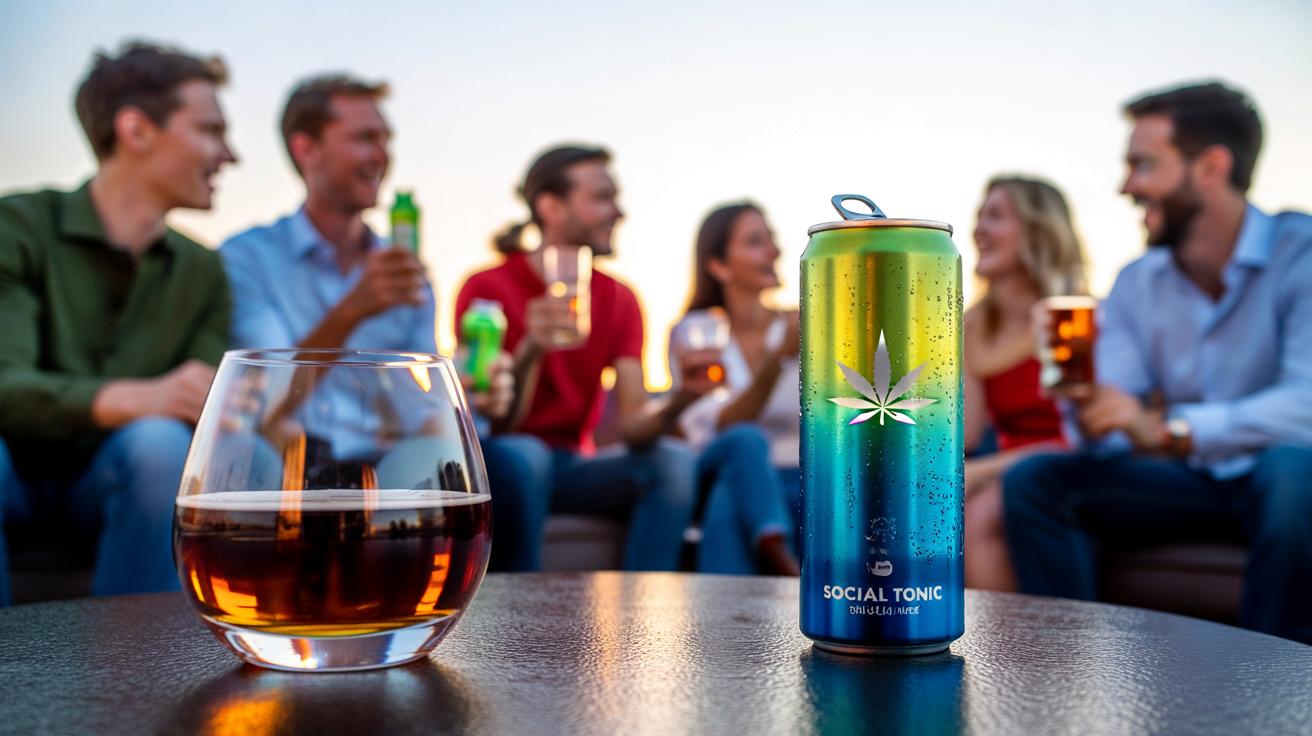
Across bars and living rooms, a quiet experiment is underway, as a new kind of drink starts edging into the picture.
Instead of another glass of wine or a hoppy IPA, some people are cracking open cans infused with cannabis. Early data from public health researchers suggests this shift, still marginal and legally patchy, could slightly reshape how we drink – and maybe, for some, how much harm alcohol does.
A surprising rival for the evening drink
For years, debates around cannabis policy have focused on smoking, vaping and edibles. Drinks barely featured. That is starting to change. In parts of North America, shelves now carry sparkling waters, “social tonics” and mocktail-style beverages dosed with THC, CBD or a mix of both.
Public health researchers are paying close attention. A US team based at the University at Buffalo surveyed 438 adults who had used cannabis in the past year. Around a third of them said they had tried cannabis beverages, often with relatively low doses of cannabinoids.
Among those who adopted cannabis drinks, self-reported alcohol intake fell from an average of seven drinks a week to around 3.3.
That finding, reported in early 2026, does not prove cause and effect. People who buy cannabis drinks may already be more health-conscious, or more motivated to cut back on alcohol. Still, the numbers have caught the eye of harm reduction specialists, because they hint at a behaviour change that does not require total abstinence.
Same glass, different buzz
One reason researchers are intrigued is the social fit of these products. A can of cannabis seltzer slots into the same moment as a beer: after work, at a barbecue, during a night in with friends.
The “ritual” barely changes. You still hold a cold can. You still sip. You still join the toast. Only the active ingredient inside is different.
Harm reduction experts argue that keeping the ritual while swapping the substance might feel less drastic than quitting alcohol overnight.
Study participants commonly reported using cannabis drinks as a straight replacement for beer, cider or cocktails in those contexts. That substitution effect appeared stronger than among those who only used edibles, oils or vapourisers, which do not mimic a standard drink as easily.
➡️ When an oral infection sneaks into cancer development
➡️ A hidden tunnel has linked Earth to distant stars for millions of years
➡️ Brain rejuvenation is measurable in adults who move more
➡️ This diabetes drug might actually slow down time itself
➡️ A gigantic buried block beneath Hawaii could explain the stability of volcanic hotspots
➡️ Human longevity depends as much on our genes as on our environment
➡️ In minutes, AI now does what medical teams needed months to complete
➡️ Physical exercise: a remedy as effective as medication against depression
What’s actually in these drinks?
Most of the products examined in the Buffalo-linked research contained modest doses of cannabinoids, often 10 milligrams or less per serving. These lower-strength drinks are marketed less as a ticket to getting “stoned” and more as a mild, socially compatible buzz.
Researchers highlight three broad types of beverages currently on sale in legal markets:
- THC-dominant drinks: designed to produce a noticeable psychoactive effect, often positioned as a “weed beer” alternative.
- CBD-dominant drinks: marketed as relaxing but non-intoxicating, closer to a wellness product.
- Balanced THC/CBD drinks: aiming for a gentler psychoactive experience, where CBD may soften some of THC’s sharper effects.
Compared with alcohol, which is linked to around 200 health conditions worldwide – including several cancers, liver disease and cardiovascular problems – low-dose cannabinoids may present a different risk profile. That does not mean they are risk-free, and scientists stress that long-term data, especially on frequent use of THC drinks, is still thin.
Harm reduction rather than perfection
The emerging discussion around cannabis beverages sits within a broader shift in public health. Instead of a simple message of “just say no”, some experts promote strategies that encourage safer patterns of use.
Replacing a portion of weekly alcohol units with a regulated, lower-risk alternative might reduce harms even if consumption does not vanish entirely.
From that perspective, cannabis drinks are being framed not as a health product, but as a potentially less damaging option than another round of spirits or strong beer. The focus is on nudging heavy drinkers toward slightly safer habits they can realistically maintain.
Caution flags from researchers
Despite the buzz around the Buffalo findings, scientists are wary of overselling the promise. The study relied on volunteers, not a random sample of the whole population, and asked them to remember their past drinking habits, which is prone to error.
Participants were only surveyed at one point in time. Researchers do not yet know whether people keep drinking less alcohol after six months or a year, or whether some drift back to their old patterns while still using cannabis drinks on top.
Without long-term, controlled studies, cannabis beverages cannot be presented as a magic bullet for problem drinking.
Legal frameworks also vary widely. In the United States and Canada, product standards, maximum THC levels and marketing rules differ between states and provinces. Europe is even more fragmented, with many countries banning THC drinks outright while allowing CBD beverages in a legal grey zone.
France, Britain and the policy gap
France, where the original research summary has drawn attention, currently bans drinks containing THC. Alcohol, by contrast, remains deeply woven into culture and cuisine, even as it drives a heavy toll in cancers, accidents and chronic disease.
Campaigns like “Dry January” have shown that large numbers of people are willing to pause or rethink their drinking for at least a month. Against that backdrop, some French and British public health voices quietly ask whether well-regulated cannabis drinks might one day become part of the toolkit for those who want to cut back without going fully teetotal.
Regulators face a tricky balance. Liberalisation without guardrails could invite aggressive marketing to young people or normalise daily intoxication. A tightly controlled model – with potency caps, plain packaging and strict age limits – could, in theory, test whether substitution benefits really materialise in practice.
Key questions for anyone considering cannabis drinks
For individuals in places where these beverages are legal, several practical questions arise before swapping a pint for a can of infused seltzer:
| Question | Why it matters |
|---|---|
| What is the THC and CBD content? | Dose determines how strong and how long the effects will be. Lower doses usually mean milder, more predictable experiences. |
| How quickly does it kick in? | Drinks can take 15–60 minutes to act. Some people re-dose too early, leading to unexpectedly strong effects later. |
| Are you also drinking alcohol? | Mixing THC and alcohol can amplify impairment, making driving or operating machinery more dangerous. |
| Do you have a history of mental health issues? | Regular THC use may worsen anxiety or psychosis in susceptible individuals, especially at higher doses. |
Potential benefits and real risks
Supporters of cannabis beverages point to a few potential upsides if they are used instead of, rather than alongside, alcohol:
- Lower risk of liver damage compared with chronic heavy drinking.
- No direct link, so far, to cancers in the way alcohol is clearly associated with several tumour types.
- Fewer calories than many alcoholic drinks, especially sweet cocktails or strong beers.
- Reduced aggression and fewer violent incidents relative to high alcohol intoxication.
On the other hand, frequent THC use can impair memory and attention, particularly in younger users, and may contribute to dependency in a minority. People with heart conditions can experience increased heart rate and blood pressure. Driving after consuming THC drinks remains dangerous, even if you feel subjectively “fine”.
What these drinks might change in everyday life
Public health simulations suggest even a modest population shift – say, a portion of regular drinkers replacing a few weekly alcoholic drinks with low-dose cannabis beverages – could shave off some hospital admissions, injuries and long-term disease burden. Those gains would depend heavily on regulation, pricing and who actually uses the products.
Picture a typical Friday night: one person chooses a cannabis seltzer instead of a third pint, gets a mild buzz, and goes home slightly earlier. Another person mixes several THC cocktails with shots of vodka and ends up far more impaired than expected. These contrasting scenarios illustrate why clear labelling, education and dosing guidance sit at the heart of current policy debates.
Terms like THC (tetrahydrocannabinol) and CBD (cannabidiol) also need demystifying for casual consumers. THC is the primary psychoactive compound in cannabis, responsible for the “high”. CBD does not cause intoxication and may dampen some of THC’s anxiety-inducing effects. Drinks can contain either or both, so reading the small print on a can matters as much as checking the strength on a beer label.
As the science develops, one question will shape the future of cannabis beverages: can they genuinely help people drink less alcohol without creating a new public health headache of their own? For now, researchers see them not as a clean replacement for alcohol, but as one experimental tool among many for nudging societies towards less harmful patterns of intoxication.